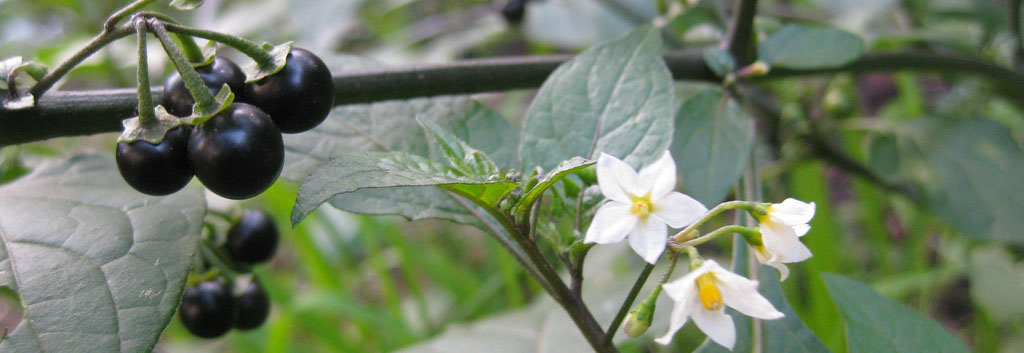

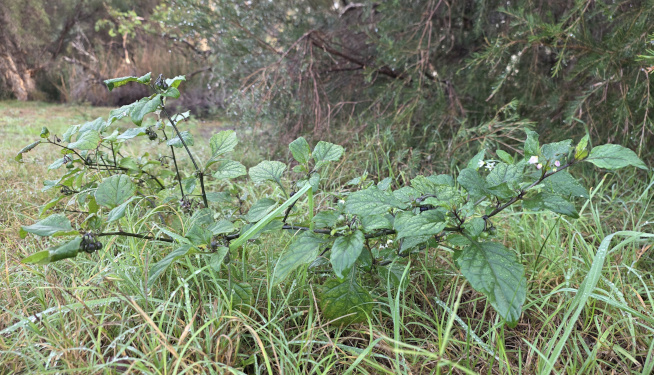
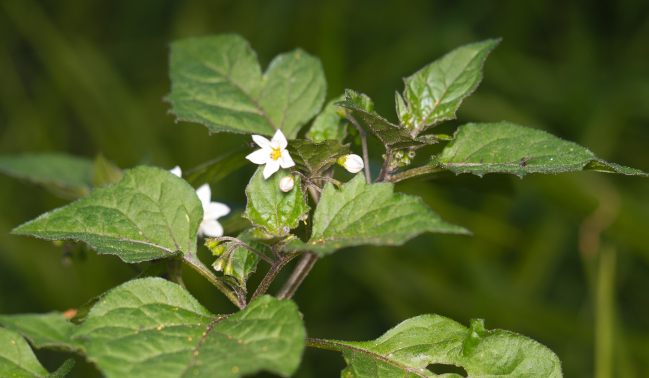
Common agricultural, wasteland and bushland weed likely introduced for medicinal reasons. Native to north Africa and Europe. Mostly an annual species, germinating whenever conditions are faviourable and sometimes biennial in milder climates, where it may live from 2-5 years. Competes vigorously for space and nutrients.
Blackberry Nightshade
Solanum nigrum
Quick facts

Status
Permitted s11

Life cycle
Annual or short-lived perennial

Growth form
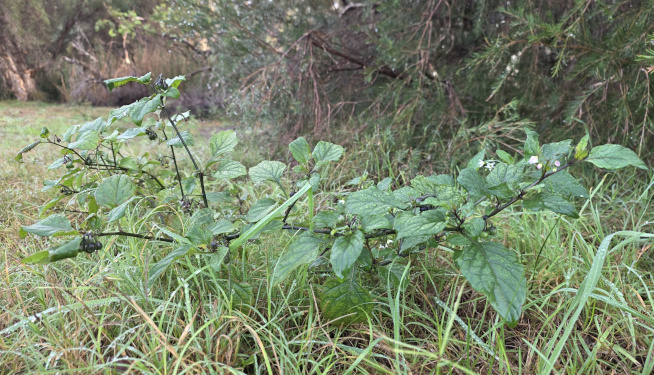
Herb

Toxicity
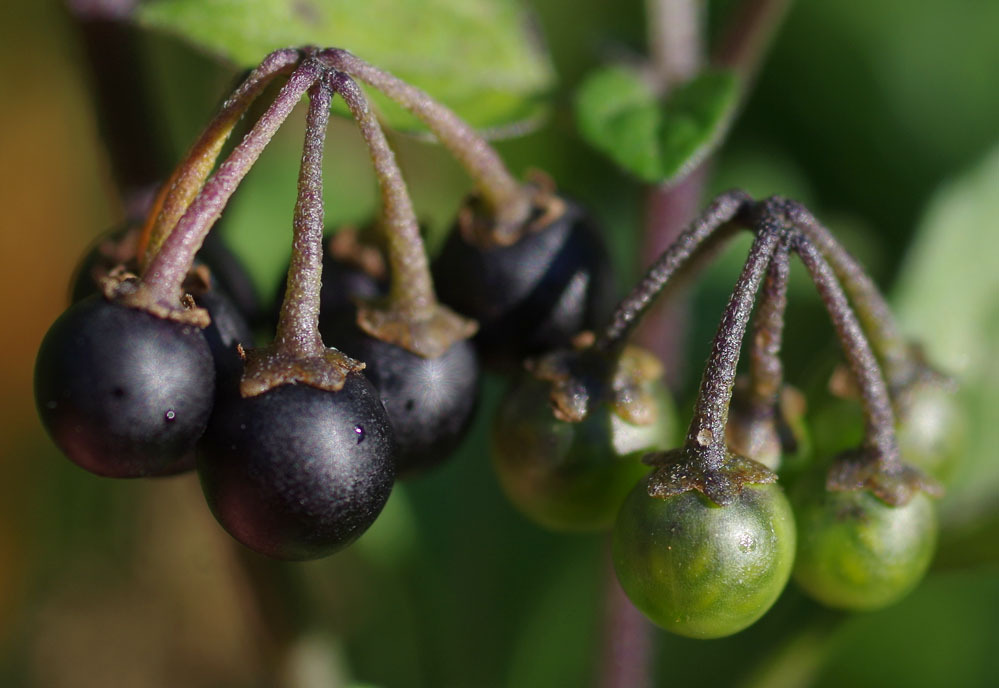
Variably toxic (green berries)

Origin
Africa, Europe and Asia

Flower
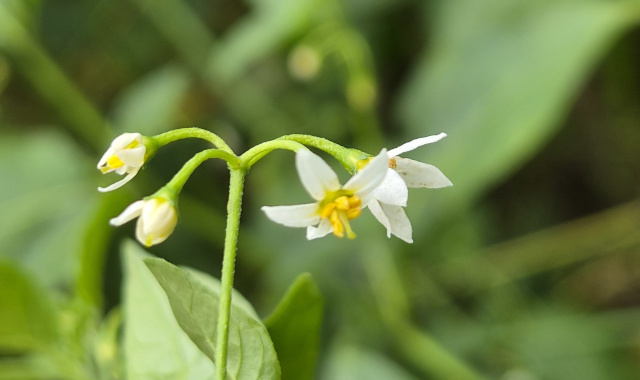
White

Dispersal
Birds, mammals

Seedbank persistancd
5 years
Form and function

Common names
Germination
Flowers
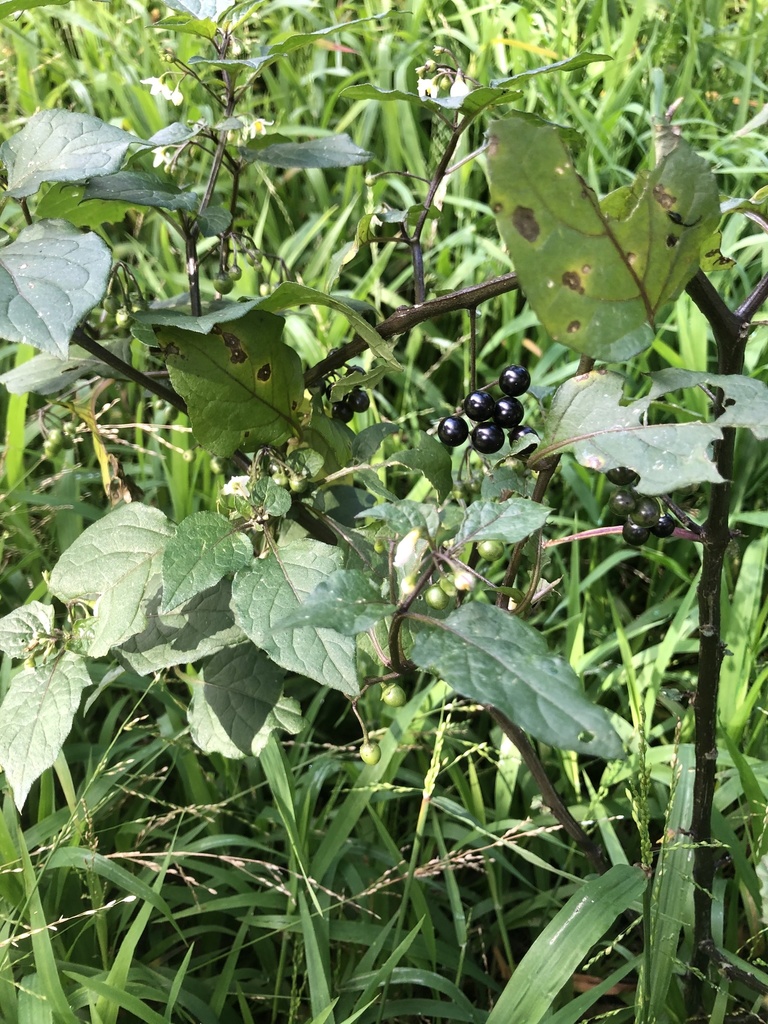
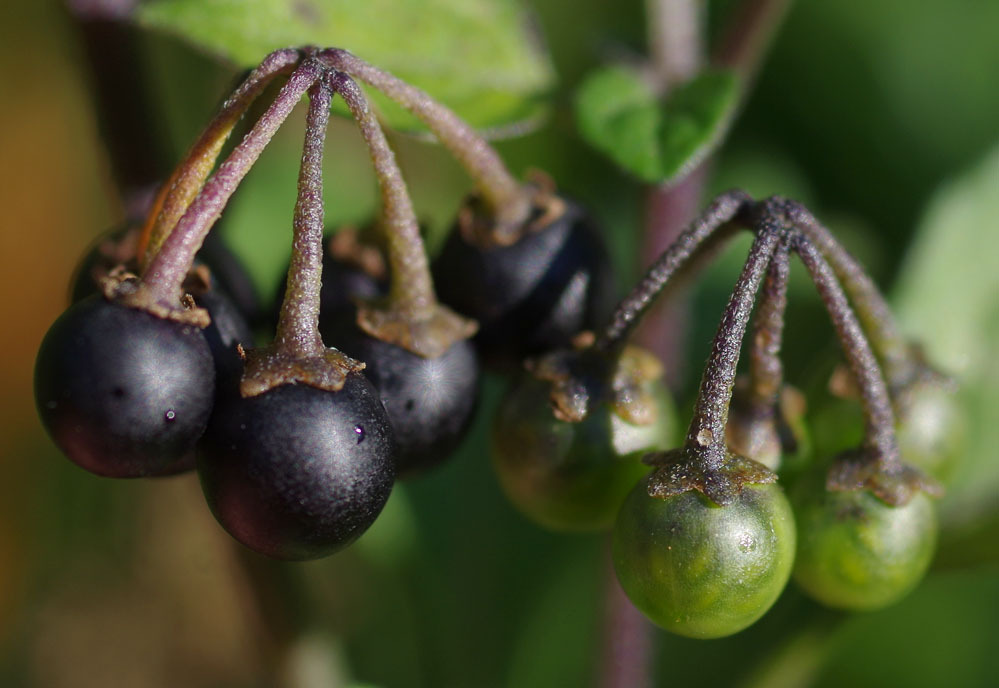
Berries
Roots
How to control


Blackberry nightshade management relies on preventing seed set, as a single plant can drop thousands of seeds that remain viable in the soil for up to 5 years. Effective control combines physical removal, careful tillage, and targeted organic or chemical herbicides applied before the plant flowers.
Physical control
Manually remove plants, by hand pulling or grubbing before flowering/seed set.
Chemical control
For small infestations apply:
- Glyphosate (360g/L) at 1% or 200 mL glyphosate per 10 L of water using a foliar application method.
- 2,4-D amine (500g/L) add 20mL in 10L of water to actively young plants in early summer, using a foliar application method, ensuring full leaf coverage and spraying until just wet.
- Mix of 20mL Fluroxypr (333g/L) in 10L of water to actively growing plants in summer, using a foliar application method, ensuring full leaf coverage and spraying until just wet.
Control infestations within range of the target area to reduce dispersal of seed by birds.
Managerial control
Blackberry nightshade prefers bares soil therefore planting perennial species that provide good mulch over the summer period to reduce germination and invasion (Moore & Wheeler 2020)
 Permit PER96570 for glyphosate
Weed Distribution Map
LSID number: [2912741] | full LSID: [https://id.biodiversity.org.au/node/apni/2912741] | field_lsid: [] | taxon: [Solanum nigrum]
ALA Reference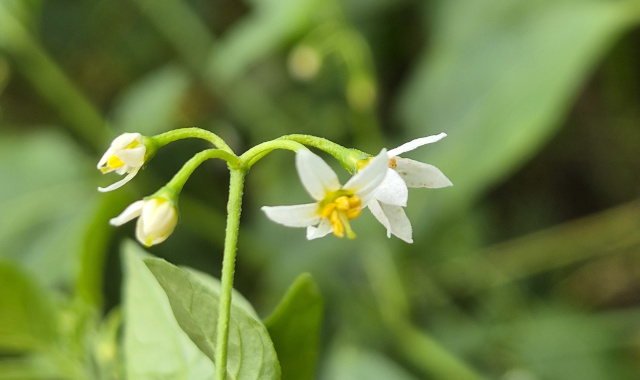
References
-
 Atlas of Living Australia (2026)
Solanum nigrum L. Blackberry nightshade.
Atlas of Living Australia (2026)
Solanum nigrum L. Blackberry nightshade.
-
Brisbane City Council (2026)
Blackberry nightshade Solanum nigrum
-
Coleman, M., Kristiansen, P., Sindel, B., Fyfe, C. (2020)
Blackberry Nightshade (Solanum nigrum): Weed management guide for Australian vegetable production.
School of Environmental and Rural Science, University of New England, Armidale.
- Moore, J. & Wheeler, J (2020) Southern weeds and their control
-
Weeds of Australia (2016)
Solanum nigrum L.
-
Western Australian Herbarium (1998–).
Florabase—the Western Australian flora. Department of Biodiversity, Conservation and Attractions.
Lifecycle calendar
| JAN | FEB | MAR | APR | MAY | JUN | JUL | AUG | SEP | OCT | NOV | DEC | Notes | |
|---|---|---|---|---|---|---|---|---|---|---|---|---|---|
| Germination | |||||||||||||
| Active Growth | |||||||||||||
| Flowering | |||||||||||||
| Fruiting |
Regularly or most commonly
Occasionally, given suitable conditions
Management calander
| JAN | FEB | MAR | APR | MAY | JUN | JUL | AUG | SEP | OCT | NOV | DEC | Notes | |
|---|---|---|---|---|---|---|---|---|---|---|---|---|---|
| Manual | |||||||||||||
| Chemical |
Optimal